
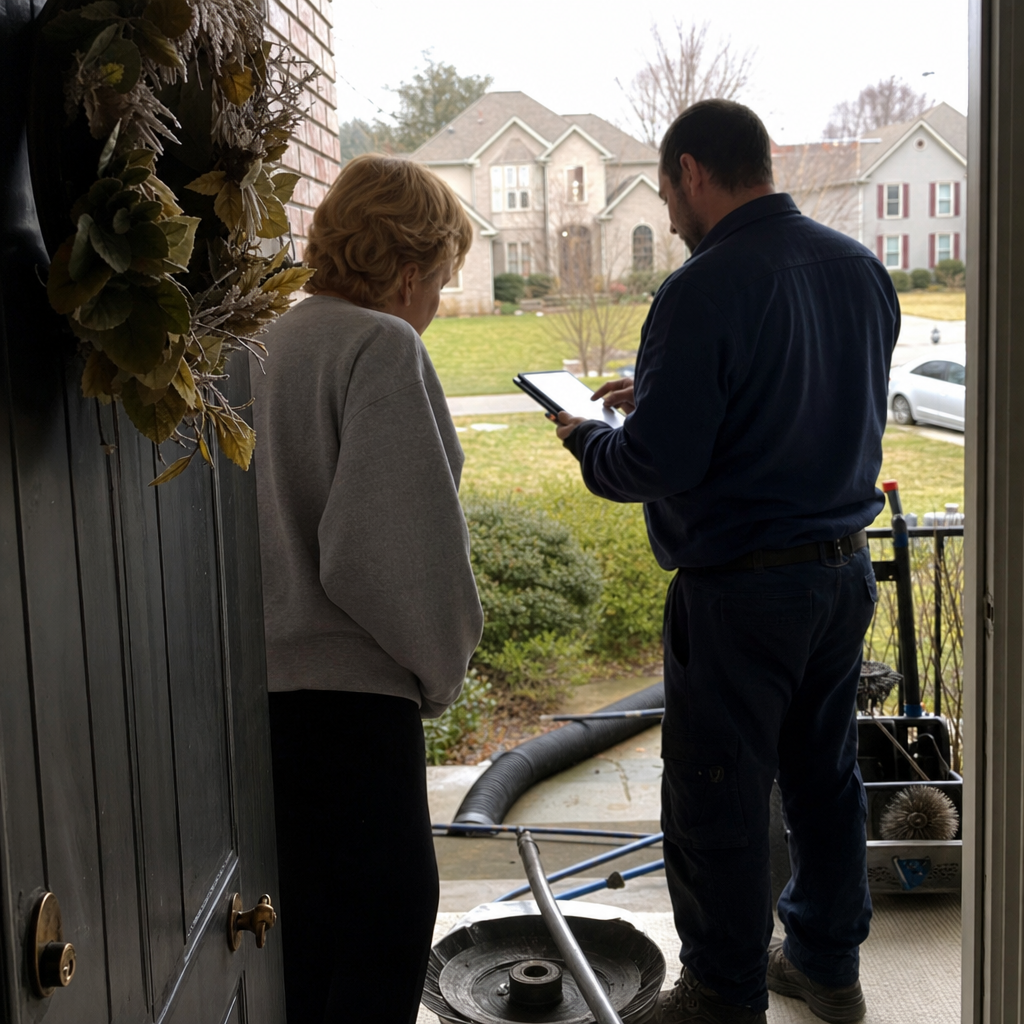
Chimney Liner Installation Cost in Greeneville, TN — What You’ll Actually Pay
Chimney liner installation in Greeneville typically runs $2,800–$5,500 for a complete flexible stainless steel system, while HeatShield resurfacing for flues that don’t need full relining falls between $1,800–$3,200. Call (888) 799-1933 for a free, exact quote — Matthew Gonzalez, Owner & Lead Technician, specs every job personally and shows up to do the work himself.
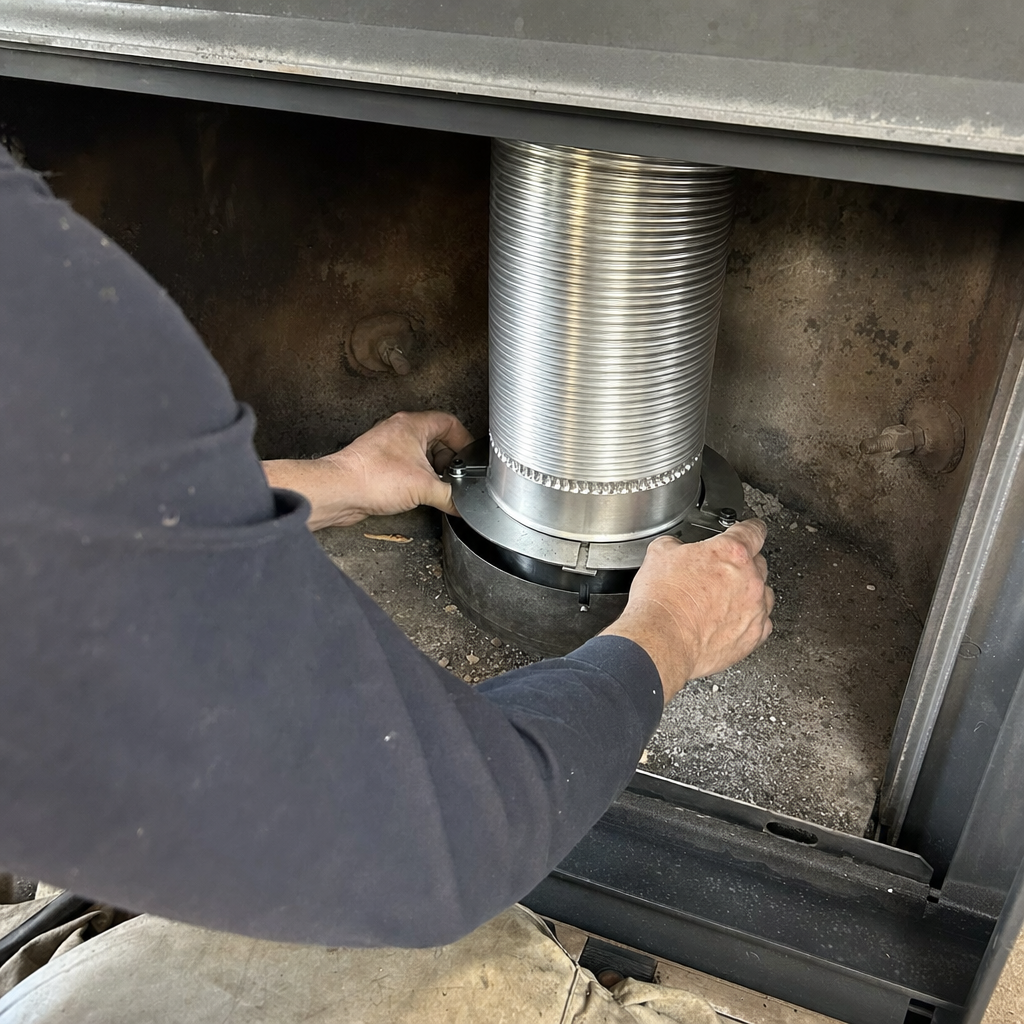
Here’s the reality we face on rural Greene County calls: roughly half the chimneys Matthew inspects are original 1930s–1950s masonry flues that were never lined and are now venting a wood stove insert someone dropped in during the 1980s. These chimneys are operating completely outside the conditions they were built for. A liner isn’t an upgrade on one of these — it’s the repair that makes the fireplace legal and safe to use. The cost conversation starts there, not with whether you “want” a liner.
Why Unlined Farmhouse Chimneys Dominate Our Greene County Calls
Greeneville anchors one of Tennessee’s historically premier burley tobacco-growing counties, and the surrounding rural landscape is filled with tobacco-era farmhouses from the 1920s–1960s whose original unlined single-flue masonry chimneys were never upgraded when wood stoves or inserts were retrofitted decades later. Heavy Appalachian hardwood burning — oak and hickory are locally abundant and culturally ingrained — combined with these aging, linerless flues makes severe creosote accumulation and structural flue deterioration the dominant service reality in this market.
This isn’t a niche problem. On rural calls, we routinely encounter chimneys that have been silently pressed into double or triple duty: serving a fireplace, a wood-stove insert, and sometimes a furnace exhaust vent. That’s a shared-flue code violation, and it’s almost always a discovery finding — the homeowner called because the stove “doesn’t draft right,” not because they knew they had three appliances breathing through one flue. When we quote liner installation on these jobs, the cost includes separating those flues to code, which catches people off guard if they haven’t worked with a specialist before.
Greeneville’s position in the Nolichucky River valley, backed by the Unaka Mountain ridgelines that top 4,000 feet to the east, pushes local winters measurably colder and wetter than Knoxville. More freeze-thaw cycles mean more spalling, more mortar joint erosion, and a heating season that commonly runs October through April. That extended burn season produces heavier creosote loads and accelerates the deterioration that makes liner installation necessary in the first place.
Installed Cost Breakdown: What You’re Paying For
The table below shows honest installed cost ranges for the two most common liner approaches in this market. These are real numbers for real jobs — not teaser rates that balloon once we’re on site.
| Liner Type / Service | Cost Range | When It Applies |
|---|---|---|
| Flexible stainless steel liner (DuraFlex) — standard masonry relining | $2,800 – $4,200 | Existing masonry with irregular flue dimensions, offsets, or significant deterioration; most common for wood stove inserts and open fireplaces |
| Flexible stainless steel liner (DuraFlex) — complex installation with shared-flue separation | $4,000 – $5,500 | Multiple appliances currently sharing one flue; requires additional flue separation and potentially second liner system |
| HeatShield cerfractory resurfacing | $1,800 – $3,200 | Clay tile flue in structurally sound condition with minor gaps, spalling, or cracked tiles; not suitable for unlined masonry or heavy deterioration |
| Insulation wrap (required for some clearances to combustibles) | $400 – $800 add-on | When liner passes through interior chimney chase near framing; NFPA 211 requirement in specific configurations |
| Stainless steel top plate and rain cap (Gelco or Olympia Chimney) | $350 – $650 | Essential termination kit; prevents water intrusion and animal entry that destroys liner investment |
These ranges assume standard two-story rural farmhouse height with roof access. Steep pitches, multiple flues, or extensive masonry repair before liner installation can push costs higher — we assess that during inspection and quote it upfront, not as a mid-job surprise.
The Sizing Calculation That Drives Cost — And Why It Matters
An undersized liner on a high-output wood stove creates dangerous draft problems: poor combustion, creosote spillage into the living space, and potential carbon monoxide issues. We spec every liner to match the appliance’s BTU output and exhaust requirements, not default to the cheapest diameter that “fits.”
Here’s how that plays out in practice:
- A large cast-iron wood stove rated at 75,000+ BTU in a drafty old farmhouse needs a 6-inch or 7-inch liner minimum, depending on flue height and configuration
- A smaller fireplace insert with a continuous burn design may spec to 6-inch but requires precise length calculation to maintain proper draft velocity
- Gas appliance conversions often need downsizing from an oversized original flue — a 7-inch masonry flue venting a 40,000 BTU gas insert will condense moisture and deteriorate without proper sizing
Matthew runs these calculations himself on every job. He took his early trade coursework at Walters State Community College in Morristown, where he picked up the fundamentals of combustion, venting, and building systems before putting in years of hands-on work that no classroom can fully replicate. That background shows up in the details — like catching that a previous installer had spec’d a 5-inch liner for a stove that needed 6-inch, which the homeowner only discovered when the house filled with smoke on a cold January night.
DuraFlex vs. HeatShield: Which One Do You Actually Need?
We carry both systems because they’re for different problems. DuraFlex flexible stainless is our go-to for existing masonry with irregular flue dimensions, offsets you can’t straighten, or significant deterioration that rules out resurfacing. It’s a complete new flue inside the old one — impervious to creosote acids, expandable for thermal cycling, and warrantied for the long haul.
HeatShield cerfractory resurfacing applies to a narrower set of conditions: clay tile flue that’s structurally sound but has minor gaps, spalling tile surfaces, or cracked joints. We pour and smooth a ceramic-refractory compound that seals the flue surface and restores proper venting. It’s less invasive and costs less — when it applies. It does not apply to unlined masonry, which describes most of the 1920s–1960s farmhouses we see in Greene County.
The brands matter here. DuraFlex and HeatShield are professional-grade materials we stock as a dedicated chimney specialist. Generalist services in this market typically don’t carry full liner systems — they’ll patch with whatever’s available through their general supply house, or subcontract the work entirely. When you call Premier, Matthew shows up personally with the correct system for your flue.
The Shared-Flue Surprise: A Cost Most Homeowners Don’t See Coming
This is the scenario that separates a real quote from a teaser price. On rural Greene County calls, we regularly find chimneys serving multiple appliances through a single flue — fireplace below, wood stove insert in the middle, sometimes furnace exhaust tied in above. This violates NFPA 211 and every applicable building code. You cannot simply drop a liner into a shared flue and call it done.
Remediation requires separating those exhaust streams, which typically means:
- Installing a dedicated liner for the primary heating appliance (usually the wood stove)
- Rerouting furnace exhaust to a separate venting system or replacing with direct-vent equipment
- Abandoning and properly sealing the fireplace flue if it’s no longer in use, or installing a second liner if it will remain active
This is why our “complex installation” range runs $4,000–$5,500 — and why we inspect before we quote. I’d rather tell you something you don’t want to hear now than have you call me after a chimney fire.
ROI in Greene County: Why This Repair Pays for Itself
In Greene County, where the heating season runs six months and dense hardwood is the primary fuel, a properly installed liner pays for itself over a five-year window through three mechanisms:
- Reduced creosote accumulation: A correctly sized, smooth stainless flue deposits far less creosote than rough, deteriorating masonry. Less creosote means fewer sweep visits and dramatically lower fire risk.
- Avoided structural repair: Unlined flues allow acidic condensation to attack mortar joints and surrounding masonry. We’ve torn into chimneys where the linerless flue had literally dissolved the back wall of the chimney structure — a $15,000+ rebuild versus a $3,500 liner installation five years earlier.
- Insurance and resale: More insurers are requiring liner documentation for wood-burning systems. An unlined chimney is a flagged item on home inspections, and we’ve been called in by sellers who need a two-week turnaround to close a deal.
The math isn’t complicated. Burn six cords of oak and hickory through an unlined flue for five years, and you’re looking at heavy creosote, probable structural damage, and a potential chimney fire. Burn the same fuel through a properly spec’d DuraFlex system, and you’re looking at routine maintenance and a chimney that outlasts your ownership.
What Our Liner Installation Process Actually Looks Like
Matthew runs every job himself — no subcontractors, no apprentices working unsupervised. Here’s how a typical liner installation unfolds:
Inspection and measurement. We camera-scan the flue from top to bottom, measure exact dimensions at multiple points (flues are rarely uniform), and document the appliance connection requirements. This takes 45–90 minutes and is built into your quote.
Specification. We calculate the correct liner diameter, length, and insulation requirements based on your specific appliance and chimney configuration — not a generic kit.
Installation. For a standard DuraFlex liner, we typically complete the job in one day: drop the liner, make the appliance connection with proper support and seal, install the top plate and cap, and verify draft performance with a smoke test or digital manometer.
Documentation. You receive photos of the completed work, specifications of what was installed, and maintenance guidance for your specific system. This documentation satisfies insurance requirements and supports warranty claims.
FAQs
Most complete liner installations in Greeneville run $2,800–$5,500 depending on liner type, flue complexity, and whether we need to separate shared flues to code. HeatShield resurfacing for suitable flues starts around $1,800. Call (888) 799-1933 for a free inspection and exact quote — estimates are free, and Matthew shows up personally.
HeatShield resurfacing costs less than full liner replacement when your clay tile flue is structurally sound with only surface damage — typically $1,800–$3,200 versus $2,800+ for stainless. However, unlined masonry or heavily deteriorated flues require full relining; patching them wastes money and creates a false sense of safety. We camera-inspect to give you an honest answer on which applies. Call (888) 799-1933 to schedule.
We stock DuraFlex and HeatShield systems for common configurations, so same-day installation is possible for straightforward jobs if the inspection confirms standard dimensions and no shared-flue issues. Complex installations requiring custom lengths or flue separation typically need 3–5 days to order specific materials. Call (888) 799-1933 and we’ll schedule to minimize your downtime.
Rural Greene County’s unlined 1930s–1950s masonry chimneys were built for open fireplaces, not the wood stove inserts or gas conversions now venting through them. These jobs require complete relining rather than resurfacing, and shared-flue configurations — extremely common in unmodified farmhouses — add code-mandated separation work that simpler jobs don’t need. The cost reflects making a century-old chimney safe for modern appliance output, not padding the bill. Call (888) 799-1933 for an inspection that tells you exactly what you’re dealing with.
Get Your Exact Liner Installation Quote in Greeneville
If your chimney is unlined, shared between appliances, or venting a wood stove it was never built for, the cost of waiting exceeds the cost of fixing it. We’ve completed Chimney Liner & Rebuild projects across Greeneville and rural Greene County — from straightforward DuraFlex drops to full flue separations on century-old farmhouses — and we quote honestly upfront.
Matthew Gonzalez, Owner & Lead Technician at Premier Chimney Cleaning Service Greeneville, handles every inspection and installation personally. With 11 years of chimney-only focus and 387 customers rating us 4.9 stars, we’re the call homeowners make when they want the job done right the first time.
Call (888) 799-1933 today for your free estimate. No subcontractors, no vague promises — just Matthew on your roof, giving you the straight answer your chimney needs.
Written by Matthew Gonzalez, Owner & Lead Technician at Premier Chimney Cleaning Service Greeneville, serving Greeneville, TN.