

HeatShield Chimney Cleaning in Church Hill, TN | Premier Chimney Cleaning Service Greeneville
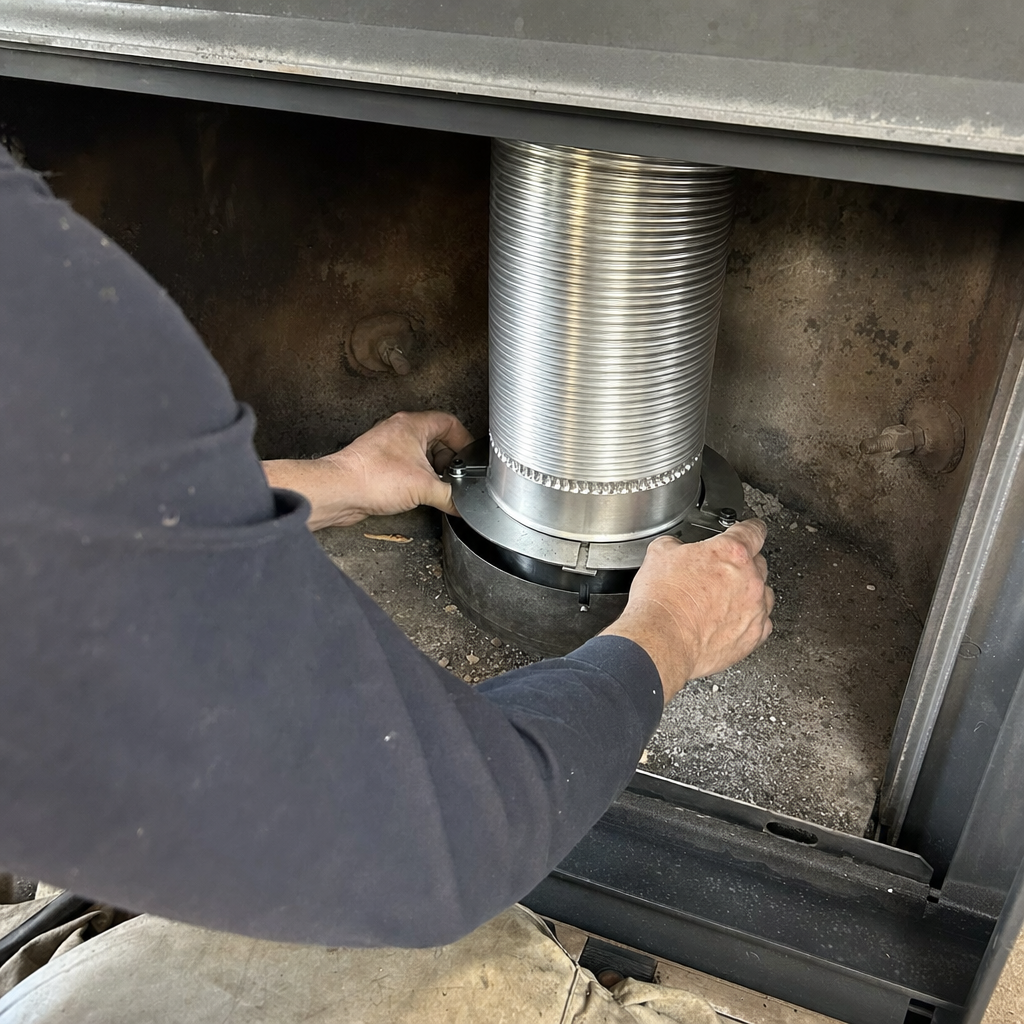
HeatShield chimney liner service in Church Hill typically runs $180–$340 for cleaning and inspection, with full liner repairs or section replacements reaching $800–$2,400 depending on flue access and the extent of ceramic damage. We’re an independent HeatShield service provider — not factory-authorized — which means we source genuine HeatShield components while setting our own standards for how thoroughly we inspect and document your system. Matthew Gonzalez, our owner and Lead Technician, handles every Church Hill job personally. Call (888) 799-1933 for a free estimate and same-week scheduling.
Why Church Hill Residents Choose Us for HeatShield Service
Eleven years of chimney-only work changes how you see a flue. Matthew Gonzalez has spent that decade in Hawkins County and the surrounding ridges, and most of his Church Hill customers arrive through neighbor referrals — usually after he caught something a previous sweep missed. He grew up near the Nolichucky River corridor, trained in combustion and venting systems at Walters State Community College in Morristown, then put in the hands-on years that no classroom replicates.
What that means for your HeatShield liner: Matthew shows up personally. No subcontractors, no apprentices working unsupervised. His inspection reports run blunt and detailed because he’s the one who’ll be doing any repair work he recommends. With 387 customers rating us 4.9 stars, we’ve built our reputation on finding problems others gloss over — cracked ceramic top plates, improperly sealed liner joints, creosote glaze that looks like “normal” buildup until you probe it.
We stock genuine HeatShield ceramic liner kits, DuraFlex components, and high-temperature silicones approved for ceramic systems. For Church Hill homeowners, that translates to faster turnaround without waiting on factory-authorized dealer schedules.
Common HeatShield Chimney Cleaning Problems We Solve in Church Hill
- Cracked ceramic top plates from valley downdrafts. Church Hill’s ridge-and-valley geography funnels wind over Bays Mountain and the Clinch Mountain ridgeline, creating erratic downdraft events that shock-cool HeatShield top seals. We’ve replaced dozens of these in the 37642 ZIP code after freeze-thaw cycling compounded the thermal stress.
- Misaligned liner sections in 1970s ranch homes. The brick ranches built during the Kingsport industrial boom often have clay flue tiles with offset joints or slight tilts. When a previous installer dropped a HeatShield Model S liner without fully correcting that geometry, the semi-rigid sections can separate at the couplings. Our Level 2 Inspection catches this with video scanning before it becomes a carbon monoxide path.
- Stage-three creosote glaze on HeatShield SS liners. Oak, hickory, and locust burn hot and long in Church Hill hearths — that’s the advantage of Appalachian hardwood access. But when burn cycles exceed the liner’s thermal capacity, pyrolysis deposits hard, glassy creosote that rotary chains barely touch. We use specialized flail tools and chemical treatment, then verify clearance with a post-cleaning video scan.
- Water infiltration at crown caps after freeze-thaw. The same valley microclimate that extends your heating season also delivers more freeze-thaw cycles than hilltop communities. HeatShield crown seals degrade; moisture reaches the liner top and starts ceramic corrosion. We repoint crowns with HeatShield-compatible mortar and replace cap sealant with manufacturer-approved high-temp silicone.
- Undersized flue geometry from coal-era conversions. Older homes near Pine Ridge Road and Silver Lake Drive still have fireboxes originally designed for coal, later converted to wood by prior owners. A HeatShield liner installation here often requires careful diameter reduction and restoration — something we’ve performed dozens of times in Church Hill’s 1950s–1970s housing stock.
HeatShield Service in Church Hill: What Local Conditions Mean for Your Equipment
Church Hill sits in the ridge-and-valley terrain of Hawkins County, where homeowners have easy access to abundant Appalachian hardwoods — oak, hickory, and locust — and burn heavily through long cold seasons trapped in the valley. This combination of high-volume, high-BTU wood burning creates unusually rapid stage-two and stage-three creosote buildup, making annual chimney cleaning not just recommended but genuinely urgent in a way it would not be in flatter, less forested parts of Tennessee.
For HeatShield liner owners specifically, that burn intensity matters. The Model R and Model S liners are rated for solid-fuel service, but their ceramic surfaces still accumulate pyrolysis deposits faster when you’re running 12-hour locust fires through extended heating seasons. The valley downdraft phenomenon — wind spilling over Bays Mountain and creating backpressure events — compounds this by cooling flue walls below the dew point during shoulder seasons. Condensation forms, creosote adheres, and the liner’s surface roughness increases, accelerating future buildup.
Many Church Hill homes on Pine Ridge Road and Silver Lake Drive have flues originally sized for coal-burning fireplaces, which are too narrow for modern wood stoves; a HeatShield liner installation often requires reducing the flue diameter twice — first from the clay tile to a smaller HeatShield liner, then back up to meet the stove outlet — a step our team has performed dozens of times in this neighborhood. Get this wrong and you create a bottleneck that guarantees creosote pooling and potential liner overheating.
HeatShield Models & Products We Service in Church Hill
We work with the full HeatShield residential line: Model R (Rigid) Liner for straight flue runs with minimal offsets; Model S (Semi-Rigid) Liner for chimneys with slight bends or transitions; Standard Ceramic Top Seal assemblies; and Insulated Liner Kits where clearance to combustibles is tight. Our truck stocks genuine HeatShield ceramic splice kits, replacement top seals, and UL-1777-certified components — not aftermarket approximations that void your system’s listing.
For non-structural repairs, we use high-temperature silicones approved for ceramic liner service and source cap hardware from Copperfield and Famco when HeatShield OEM fasteners aren’t available. Our preference is always repair over replacement: a patched Model R section with manufacturer-certified splice hardware performs identically to new, at roughly 40% of the cost.
HeatShield Service Pricing in Church Hill
| Service | Typical Range |
|---|---|
| Level 2 Inspection with video scan | $180 – $260 |
| Creosote removal & cleaning (HeatShield liner) | $220 – $340 |
| Ceramic top seal replacement | $280 – $450 |
| Liner section splice/repair (per section) | $400 – $680 |
| Full HeatShield liner installation (coal-conversion flue) | $1,800 – $2,800 |
| Crown repointing with seal restoration | $320 – $580 |
What drives cost: flue height, roof access difficulty, the extent of creosote glazing, and whether we’re working with standard clay-tile geometry or the modified coal-era flues common in older Church Hill neighborhoods. Every estimate includes the Level 2 Inspection — we don’t quote blind. Call (888) 799-1933 for an exact quote; estimates are free.
Serving Church Hill, TN — Our Local Coverage Area
We’re based in the Church Hill area and know this community well. Use the map below to see our service coverage — if you’re nearby, we can almost certainly help.
FAQs — HeatShield Chimney Cleaning in Church Hill
Yes — this is one of the most common HeatShield service calls we get in the 37642 area. The downdraft events caused by wind spilling over Bays Mountain create backpressure that overwhelms marginal draft, especially if your ceramic top seal has developed hairline cracks or if creosote buildup has roughened the liner interior. Our Level 2 Inspection with video scan identifies which factor is dominant. Call (888) 799-1933 to schedule; we can usually diagnose this in under an hour.
Heavy creosote doesn’t mean the liner is failing — it means your burn pattern is pushing the liner’s thermal capacity during extended heating seasons. Oak and hickory are dense, high-BTU woods; in Church Hill’s valley-trapped cold, homeowners tend to burn longer cycles than the liner was designed for. The creosote is a symptom of pyrolysis conditions, not liner material degradation. We clean with rotary flail tools rated for ceramic surfaces, verify with video, and advise on burn practices that reduce future buildup. Call (888) 799-1933 for cleaning availability.
True in most cases. HeatShield’s Model R and Model S liners are designed to be dropped or pushed down existing flue channels, encapsulating damaged clay tile without demolition. For 1970s ranch homes in Church Hill, we often encounter clay tile that’s cracked at the joints but structurally sound enough to serve as a host. The exception: if the flue was originally coal-sized and you’ve retrofitted a high-output wood stove, we may need to address diameter mismatch first. We inspect before committing to any approach. Call (888) 799-1933 for a free evaluation.
That white powder is efflorescence — mineral salts left by moisture evaporation. On a one-year-old HeatShield top plate, it usually indicates water reaching the ceramic surface, either through crown cap seal failure or condensation from marginal draft. In Church Hill’s freeze-thaw microclimate, this accelerates ceramic spalling if ignored. We remove the cap, clean the plate, reseal with manufacturer-approved high-temp silicone, and address the moisture source. It’s repairable now; left alone, it becomes a full top-section replacement. Call (888) 799-1933 for an inspection.
Locust burns longer and hotter than most Appalachian hardwoods, which extends your effective heating season and increases total annual creosote production. For Church Hill homeowners running 12-hour locust cycles, we recommend inspection and cleaning every 12 months rather than the standard annual interval — and we check for glazed creosote specifically, since locust’s sustained high temperatures can push deposits into the hardened stage-three form that standard brushes won’t remove. Matthew’s blunt on this: “I’d rather tell you something you don’t want to hear now than have you call me after a chimney fire.” Call (888) 799-1933 to set up a schedule that matches your actual burn pattern.
Service Areas Near Church Hill
We run HeatShield service calls throughout Hawkins County and into neighboring Sullivan and Washington counties: Greeneville (our base), Morristown, Newport, Jonesborough, and Erwin. For Church Hill residents, that means we’re not driving from Knoxville or Johnson City — we’re local, with same-week availability for most HeatShield cleaning and repair work.
Book Your HeatShield Service in Church Hill Today
Matthew Gonzalez handles every HeatShield inspection, cleaning, and repair personally. Same-week scheduling is typically available for Church Hill calls, and we carry genuine HeatShield components on our truck for repairs that don’t require ordering. Call (888) 799-1933 for your free estimate.
Written by Matthew Gonzalez, Owner & Lead Technician at Premier Chimney Cleaning Service Greeneville, serving Church Hill and Hawkins County since 2013.