
Famco Chimney Cleaning & Sweep in Greeneville: A Homeowner’s Guide
Famco chimney components are professional-grade caps, dampers, and flashing parts found on many Greeneville homes, but the brand name alone doesn’t tell you if your system is safe or needs work. A proper chimney inspection checks fit, seal condition, and whether the component matches your flue type — not just who manufactured it. If you’d rather not climb your roof to find out, call us at (888) 799-1933 and Matthew will check it during a free estimate.
Here’s a mistake we see constantly: a homeowner in Greeneville tells us their “Famco chimney needs cleaning,” and we arrive to find they’re holding a rusted cap they found in the garage, unsure if it’s even from their house. Famco doesn’t make chimneys — they make the hardware that protects and controls them. Confusing the two leads to mismatched repairs and wasted money. After 11 years of chimney-only work in this area, we’ve learned that knowing what you’re actually looking at saves you hundreds before any tools come out.
What Famco Actually Manufactures for Your Chimney System
Famco produces ventilation and chimney-top hardware, not complete chimney systems. Their products appear in three main places on a typical Greeneville home:
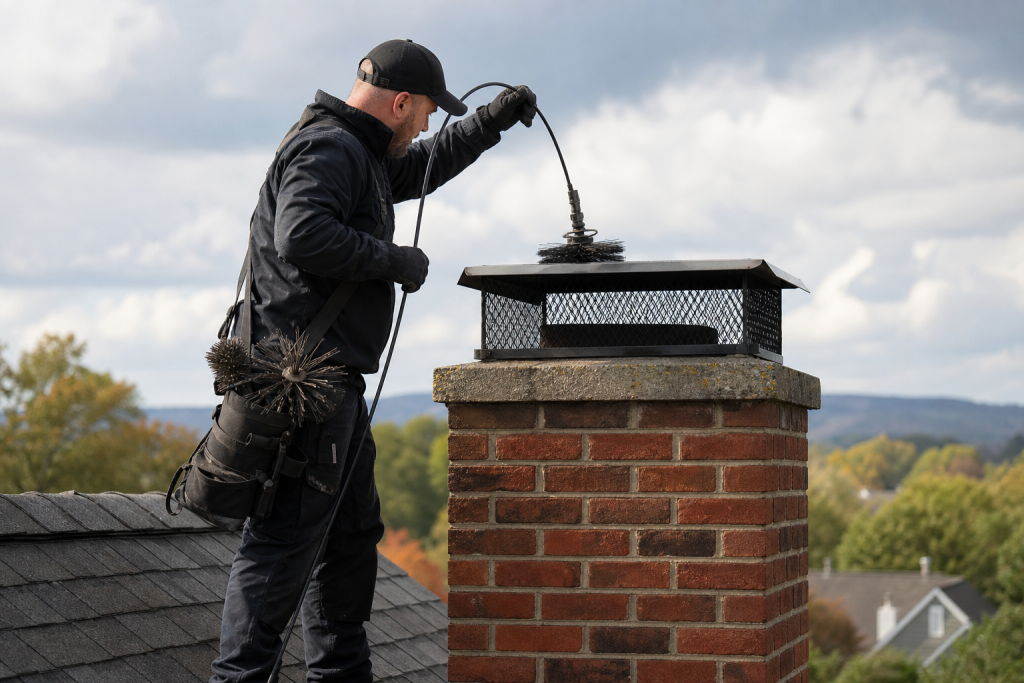
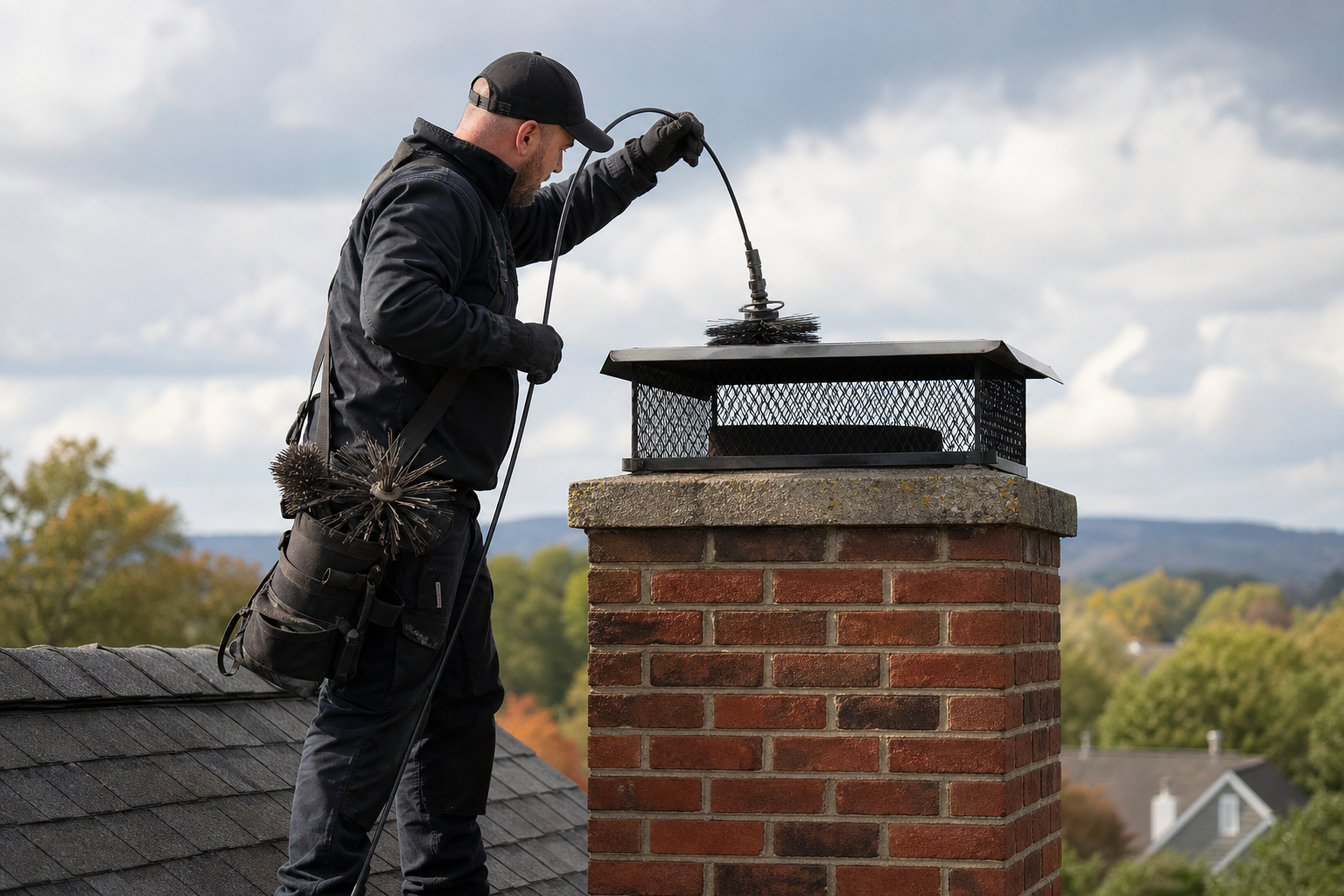
- Chimney caps — the metal cover that keeps rain, animals, and debris out of your flue while letting smoke escape
- Top-sealing dampers — spring-loaded or pivoting doors that close off the flue when your fireplace isn’t in use, preventing heated air loss
- Flashing components and accessories — the metalwork where your chimney penetrates the roof, plus ancillary hardware like cleanout doors and vent covers
We regularly find Famco caps on older homes near downtown Greeneville and in the rolling neighborhoods off East Andrew Johnson Highway, where builders in the 1990s and 2000s specified their galvanized and stainless-steel models. The caps hold up reasonably well, but Greeneville’s freeze-thaw cycles and occasional heavy spring rains test the seal between cap and flue tile. When that seal fails, water runs down inside your chimney — not around it — which is far more damaging than surface rust.
If you’re trying to identify whether you have Famco hardware, look for stamped branding on the cap’s skirt or damper frame. It’s often small and weathered, so binoculars from ground level work better than a risky climb. The model number matters because Famco produces caps in specific flue sizes — a 13×13 inch cap forced onto a 12×12 flue leaves gaps; a 14×14 cap overhangs and catches wind.
How to Spot Wear That Needs Professional Attention
Not every speck of rust means replace the component. Here’s what we check during a standard inspection in Greeneville, and what you can observe safely from below:
- Surface rust versus through-rust — light orange staining on galvanized steel is cosmetic; flaking metal you can see daylight through is structural failure
- Mesh condition on capped flues — Famco’s spark arrestor mesh prevents ember escape but corrodes faster than the cap body; missing or torn mesh is a code concern
- Damper operation — a top-sealing Famco damper should open fully when the cable is pulled and seal snugly when released; if it hangs crooked or won’t fully close, the spring mechanism or frame has warped
- Flashing seal integrity — look for water staining on your ceiling near the chimney breast, especially after Greeneville’s March and April storm periods
Last month we inspected a cap in the Oak Grove area where the homeowner had “fixed” a loose Famco cap with roofing tar. The tar trapped moisture against the flue tile, accelerating deterioration. Proper chimney cap installation uses stainless steel screws into the flue crown or a compression-fit mounting system — not adhesive shortcuts. That distinction between a quick fix and correct repair is exactly why we measure and fit every replacement rather than guessing from a photo.
Why Brand Matters Less Than Proper Fit and Installation
Famco makes decent hardware, but we’ve installed equally durable caps from Copperfield and DuraFlex depending on the specific application. The critical factors aren’t brand loyalty — they’re:
- Flue compatibility — round, square, or rectangular flues each need matching cap geometry; forcing a fit creates gaps that collect creosote
- Material grade for exposure — Greeneville’s humidity and occasional ice events mean 304 stainless steel outlasts galvanized steel by a decade or more
- Mounting method — screw-mounted caps suit solid crowns; clamp-mounted versions work for flue tiles without adequate crown overhang
- Clearance to combustibles — the cap must extend high enough that sparks dissipate before contacting roofing materials
We’ve replaced “bargain” caps from hardware stores that lasted three years versus professional-grade Famco or HeatShield-compatible units still performing after twelve. The difference isn’t the logo stamped on top — it’s the gauge of metal, the quality of welds, and whether the installer took five minutes to verify squareness or just slapped it on and drove away.
That said, when we do specify Famco for a Greeneville replacement, it’s usually because their damper mechanisms offer reliable cold-weather operation. We’ve had fewer callback issues with their top-sealing dampers in January and February than with some discount alternatives that gum up or freeze partially open.
What Happens During a Professional Chimney Sweep With Famco Components
When we sweep a chimney in Greeneville that has Famco hardware, the inspection protocol is specific. First, we remove the cap if it’s screw-mounted — this lets us examine the flue tile crown for cracks that would undermine any cap’s effectiveness. Then we measure the flue opening at multiple points; flues aren’t always perfectly square, and a cap that fit when installed may have tilted as the house settled.
We check the damper’s seal with a smoke pencil or incense stick, watching for air leakage that indicates energy loss and potential backdraft issues. For gas fireplace systems, this step is critical — a leaking damper can allow combustion gases to migrate when the unit isn’t running. We document mesh condition, frame integrity, and whether the mounting hardware is original or a homeowner’s improvised replacement.
After cleaning, we reinstall with fresh sealant at the cap-to-crown joint if needed, or recommend replacement when wear exceeds safe limits. The whole process takes 45–90 minutes for a standard fireplace chimney, and we explain what we found before any additional work is discussed. That’s the advantage of having Matthew show up personally — you’re talking to the person who’ll actually do the repair, not a salesperson working from a script.
Greeneville’s Climate and Long-Term Component Performance
Greeneville sits in the foothills of the Appalachian Mountains at roughly 1,300 feet elevation, which means more freeze-thaw cycles than lower-elevation Tennessee cities and more exposure to wind-driven rain from weather systems crossing the mountains. These conditions matter for chimney hardware selection:
- Stainless steel over galvanized — the additional upfront cost pays for itself when you’re not replacing a rusted cap at year seven
- Proper crown slope — Famco caps can’t compensate for a flat or reverse-sloped concrete crown that pools water; we often repair crowns before installing new caps
- Animal intrusion resistance — Greeneville’s squirrel and raccoon populations are active year-round; heavier-gauge mesh and secure mounting prevent the “something’s living in my chimney” calls we get each October
We’ve also noticed that homes in the more exposed ridge-top developments west of town — areas with less tree cover — see faster weathering of galvanized components due to UV exposure and wind abrasion. For those properties, we typically recommend upgrading to stainless or copper-finish alternatives regardless of what was originally installed.
The professional-grade materials we carry — including Famco, Gelco, and Olympia Chimney products — aren’t available at retail because they require proper measurement and installation training. A homeowner can buy a generic cap at a hardware store, but they can’t buy the caliper, the smoke pencil, or the 11 years of seeing what fails first in Greeneville’s specific conditions.
When to Call a Pro — and What We’ll Check
If you can see visible rust, your damper won’t fully close, or you’ve had water staining near your chimney, it’s time for professional inspection. We don’t charge to come look, and we’ll show you exactly what we find with camera footage from inside the flue if needed. Chimney repair in Greeneville ranges from simple cap replacement to crown rebuilding, and we handle the full spectrum — so you’re not calling a second contractor when the problem turns out to be bigger than the cap.
Related services: Fireplace services in Greeneville for gas unit maintenance and troubleshooting, or our main Premier Chimney Cleaning Service Greeneville home page to schedule your annual sweep.
The Bottom Line
Famco chimney components are legitimate professional hardware, but they’re only as good as their installation and the condition of the chimney they’re protecting. Knowing the brand name on your cap doesn’t tell you if your flue is sound, your crown is cracked, or your damper is leaking heated air into your attic. For Greeneville homeowners, the smart approach is annual inspection by a specialist who understands how local weather and construction patterns affect chimney performance — not just someone with a brush and a ladder.
Key takeaways:
- Famco makes caps, dampers, and flashing accessories — not complete chimney systems
- Visible rust, mesh damage, or damper malfunction need professional assessment, not DIY patching
- Proper fit and material grade matter more than brand name for long-term performance
- Greeneville’s elevation and freeze-thaw cycles accelerate wear on lower-grade materials
- Professional-grade replacement parts and correct installation prevent the cycle of repeated repairs
If you’re in Greeneville and need help identifying what’s on your chimney or whether it needs attention, Premier Chimney Cleaning Service Greeneville offers free estimates — call (888) 799-1933 and Matthew will handle the inspection personally.
Frequently Asked Questions
Chimney cap replacement in Greeneville typically runs $180–$350 for professional-grade stainless steel units, including removal of the old cap, crown seal inspection, and proper installation. The exact price depends on flue size, accessibility, and whether your crown needs repair before the new cap goes on. Call (888) 799-1933 for a free estimate — we’ll measure and quote on-site.
You can brush off surface debris from ground level, but removing the cap for thorough cleaning requires working at roof height with proper fall protection — something we don’t recommend homeowners attempt. The cap’s mounting screws often seize after years of heat cycling, and forcing them can crack the crown. We clean caps as part of our standard sweep service and inspect the seal while we’re up there.
Famco’s top-sealing dampers seal more effectively than old-style throat dampers built into the fireplace, reducing heat loss by roughly 75% when closed. However, they require a functional flue in good condition — a top damper on a deteriorated chimney just traps moisture. We assess your flue’s condition before recommending any damper type.
The National Fire Protection Association recommends annual chimney inspection for all wood-burning systems, and we follow that schedule strictly for Greeneville homes given our freeze-thaw climate and active wildlife. Gas fireplace systems should be inspected every one to two years depending on use. During each inspection, we evaluate cap, damper, and flashing condition as part of the complete assessment — not as add-ons.
Written by Matthew Gonzalez, Owner & Lead Technician at Premier Chimney Cleaning Service Greeneville, serving Greeneville since 2015.
Need Chimney Cleaning Help?
Call Premier Chimney Cleaning Service Greeneville — licensed & insured, here with fast after-hours help in Greeneville.
(888) 799-1933