
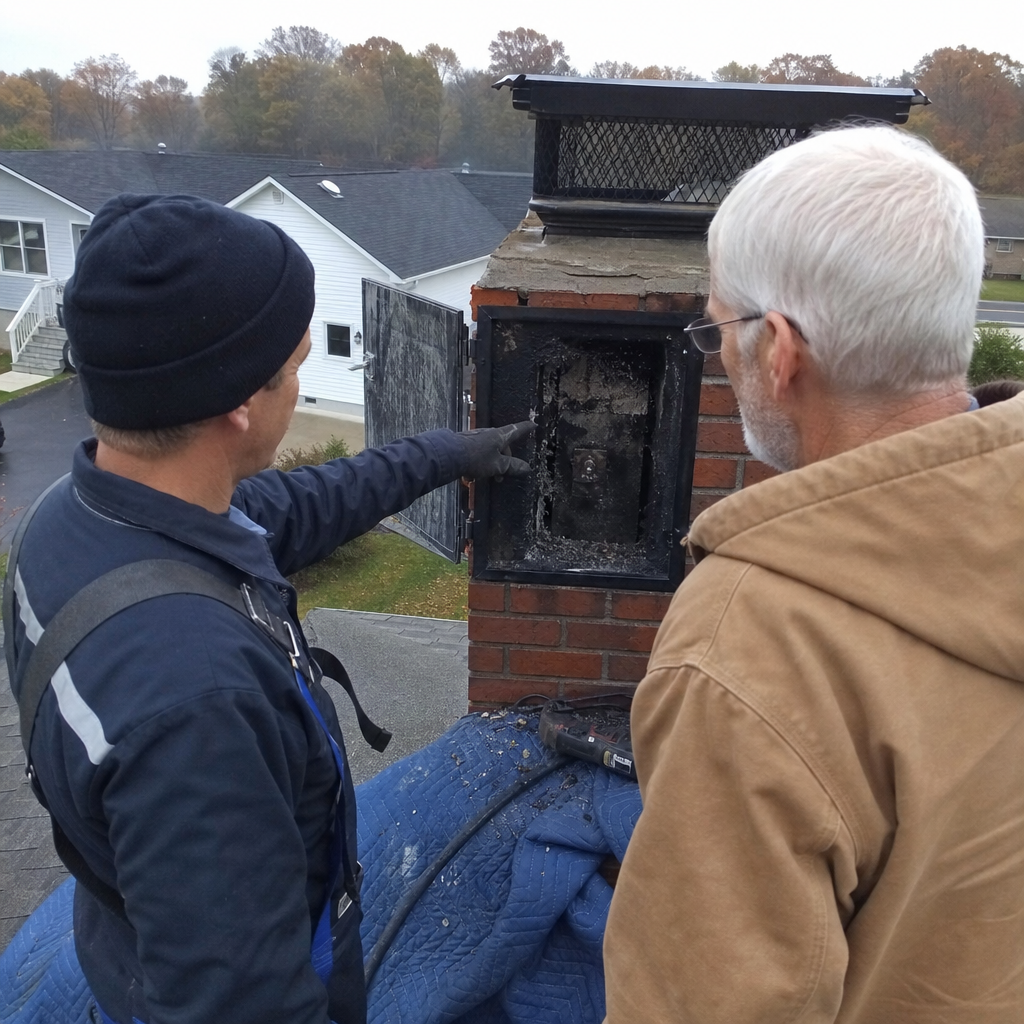
What Is Creosote Buildup? A Greeneville Homeowner’s Guide to the Three Stages in Your Flue
Creosote buildup is the accumulation of tar-like combustion byproducts that coats the inside of your chimney flue when wood or fossil fuels burn incompletely. It forms in three distinct stages—flaky soot, crunchy tar, and glazed carbon—and progresses from a routine fire hazard to a serious chimney fire risk that standard brushing cannot remove. In Greeneville, where rural Greene County homeowners burn dense Appalachian hardwood through six-month heating seasons in aging, often unlined masonry chimneys, Stage 2 and Stage 3 creosote are far more common than the light dusting most people picture.

We’re Premier Chimney Cleaning Service Greeneville, and after 11 years of chimney-only work in this market, we can tell you that “creosote” means something different on a farmstead near the Nolichucky River than it does in a newer Knoxville subdivision. The same word covers three chemically and physically distinct materials, and confusing them leads to under-treatment, missed fire risks, and callbacks that should never happen. Matthew Gonzalez, our Owner and Lead Technician, handles every sweep and inspection personally—no subcontractors, no rotating crews—and the blunt truth is that Greene County burning habits and flue conditions push most deposits past Stage 1 faster than homeowners expect.
If you’re burning oak or hickory in an older Greeneville flue and haven’t been swept in two or more seasons, assume Stage 2 until proven otherwise. That’s what the evidence on our rural Greene County chimney calls consistently shows. Call (888) 799-1933 for a no-pressure assessment—estimates are free, and we’d rather catch it now than after a chimney fire.
The Three Stages of Creosote: What You’re Actually Dealing With
Stage 1 creosote is the dusty, gray-black flake that a standard wire brush knocks loose in ten minutes. It forms when dry, seasoned hardwood burns hot and complete, leaving mostly carbon soot with minimal condensed tar. It smells like a campfire, brushes away dry, and is what most homeowners imagine when they think “dirty chimney.” A routine Chimney Cleaning & Sweep handles this cleanly.
Stage 2 creosote is where Greene County chimneys typically land. It forms when flue temperatures run cooler than optimal—common in unlined masonry flues that bleed heat into surrounding brick—or when wood moisture content creeps above 20 percent. The material is crunchy, porous, and resembles hardened tar chips or burnt marshmallow. It clings to flue walls and requires a rotary cleaning system with spinning chains or whips to fracture and extract. A standard brush skims the surface and leaves the bulk behind, which is exactly how previous “cheap sweeps” create false confidence.
Stage 3 creosote is the glazed, black, lacquered coating that looks like obsidian or hardened automotive undercoating. It forms when Stage 2 deposits undergo repeated heating cycles—the distillation of volatile compounds under sustained fire exposure—until the material fuses into a nearly impermeable glaze. It is the most combustible form, with ignition temperatures dropping to approximately 450°F, and it laughs at brushes, rotary chains, and consumer-grade chemical logs. Professional-grade chemical treatment—applied, allowed to dwell, and followed by a separate return visit with mechanical removal—is the only protocol that works safely.
Here’s how the stages compare in what we actually encounter on Greeneville roofs:
- Stage 1: Dry, flaky, brushes loose easily — routine sweep resolves, fire risk moderate and manageable
- Stage 2: Crunchy, porous, requires rotary mechanical cleaning — fire risk elevated, needs specialized equipment
- Stage 3: Glazed, hardened, chemically fused — requires professional-grade chemical treatment plus return visit, highest fire risk
Why Greene County Pushes Creosote Past Stage 1 Faster Than Elsewhere
The rural landscape around Greeneville anchors one of Tennessee’s historically premier burley tobacco-growing counties, and the surrounding farmhouses from the 1920s through 1960s carry a specific liability: original unlined single-flue masonry chimneys that were never upgraded when wood stoves or inserts were retrofitted decades later. These flues run measurably cooler than modern lined systems because the surrounding brick mass absorbs combustion heat instead of reflecting it up the stack. Cooler flue gas temperatures mean more condensation of the volatile organic compounds that form creosote. More condensation means faster progression from Stage 1 to Stage 2, and eventually Stage 3.
The wood itself compounds this. Oak and hickory are locally abundant, culturally ingrained, and dense enough to burn long and slow—which is efficient for heat but produces more condensable volatiles per BTU than softwoods like pine when combustion is less than ideal. A six-month heating season, October through April in the Nolichucky River valley backed by the Unaka Mountain ridgelines, gives more thermal cycles for deposits to mature. Greeneville sits measurably colder and wetter than Knoxville, generating more annual freeze-thaw cycles that accelerate spalling and erode mortar joints on exterior chimney masonry. The resulting heating season produces heavier-than-average creosote loads.
We also encounter a specific Greene County pattern that accelerates risk: original 1930s–1950s single-flue chimneys pressed into double or triple duty, serving a fireplace, a wood-stove insert, and sometimes a furnace exhaust vent. This shared-flue configuration is a code violation, extremely common in unmodified farmhouses, and almost always a discovery finding during our inspection—not something the homeowner reported. The reduced draft capacity of an overloaded flue drops temperatures further, pushing creosote formation harder.
On in-town Greeneville calls, late-Victorian and early-20th-century homes with multi-flue masonry chimneys show advanced mortar joint deterioration from these same freeze-thaw cycles. The flues still function, but they’re draftier, slower to warm, and more prone to the cool-wall condensation that breeds Stage 2 and Stage 3 deposits.
What Each Stage Means for Safety, Cost, and Urgency
The fire risk difference between stages is not incremental—it’s categorical. Stage 1 creosote burns, but a flue fire in Stage 1 material typically self-extinguishes or is contained by a standard sweep. Stage 3 creosote burns violently, can reach temperatures exceeding 2,000°F, and cracks flue tiles, damages mortar, and penetrates surrounding structure through minute gaps. The National Fire Protection Association identifies creosote-fueled chimney fires as a leading cause of residential structure fires in wood-burning jurisdictions.
The treatment protocol and cost scale with stage:
| Creosote Stage | Typical Greeneville Treatment | Time Required | Follow-Up Needed |
|---|---|---|---|
| Stage 1 | Standard brush sweep with HEPA vacuum | 45–90 minutes | Annual inspection |
| Stage 2 | Rotary mechanical cleaning with chains/whips | 1.5–2.5 hours | Inspection in 6–12 months |
| Stage 3 | Professional chemical treatment, dwell period, return visit with rotary removal | Two visits, 2–3 hours total | Post-treatment inspection before use; possible liner evaluation |
We use Copperfield rotary equipment for Stage 2 mechanical cleaning—industrial-grade systems that fracture deposits without damaging clay tile or masonry. For Stage 3, we apply professional-grade chemical treatments that are not available in retail channels, allow proper dwell time for the chemistry to penetrate the glaze, and return with rotary extraction. Where flue surfaces have been compromised by prolonged Stage 3 exposure or prior fire damage, we evaluate HeatShield resurfacing to restore a smooth, non-porous flue interior that resists future accumulation.
Consumer-grade chemical logs—the ones sold at hardware stores—can soften light Stage 2 material slightly, but they do not penetrate Stage 3 glaze and they create a false sense of action. We’ve pulled intact glazed deposits from flues where homeowners burned a dozen logs and assumed the problem was solved. It wasn’t.
Common Local Scenarios: What Matthew Sees on Greeneville Roofs
Every spring, after the last fires of April die out, we get a cluster of calls from rural Greene County farmsteads where the homeowner noticed “something flaky falling into the firebox” or “a weird tar smell when we light up next fall.” What we find follows patterns so consistent they’re predictable.
The oak-and-hickory burner with the 1940s unlined flue: This is the dominant profile. The homeowner burns seasoned hardwood, thinks they’re doing everything right, and hasn’t been swept in three or four seasons because “it still draws fine.” The flue has Stage 2 throughout, often with Stage 3 glazing in the upper third where temperatures drop most. We rotary clean the full length, apply chemical treatment to the glazed sections, and schedule a return visit. In about one in five of these, we also find the shared-flue configuration—fireplace and wood stove on the same flue, sometimes with an abandoned furnace vent—that the previous owner never disclosed.
The “quick sweep” recipient with hidden Stage 2: A homeowner hired a cheap sweep who brushed for twenty minutes, pronounced it clean, and left. We arrive for a proper inspection and find Stage 2 still clinging to the flue walls, especially in the smoke chamber and above the damper where brush access is poor without rotary equipment. The previous service wasn’t fraudulent—just inadequate for what Greene County flues actually contain.
The gas-log retrofit with surprise masonry damage: A homeowner converted a wood fireplace to gas inserts, assuming creosote was no longer a concern. But years of prior wood burning left Stage 3 deposits that continued to off-gas and corrode the flue interior. Gas combustion produces water vapor that, in a cool unlined flue, condenses on existing deposits and accelerates masonry deterioration. We encounter this regularly in the older in-town Greeneville stock.
Matthew Gonzalez, Owner and Lead Technician at Premier Chimney Cleaning Service Greeneville, puts it directly: “I’d rather tell you something you don’t want to hear now than have you call me after a chimney fire.” That means flagging Stage 2 and Stage 3 deposits even when the homeowner hoped for a quick, cheap sweep. It means documenting shared-flue violations that require correction. It means recommending liner evaluation when an unlined flue shows repeated Stage 3 accumulation that proper materials—like DuraFlex stainless liners or Olympia Chimney systems—would prevent.
How to Assess Your Own Situation (Safely)
We do not recommend DIY flue inspection. The combustion byproducts in Stage 2 and Stage 3 are carcinogenic, the confined space presents fall and entrapment hazards, and without a borescope camera and trained eye, you’re guessing. That said, there are observable signs that suggest which stage you may have:
- Stage 1 indicators: Light, flaky black material that falls into the firebox when you tap the damper; minimal odor; sweep was within the last 12–18 months with routine burning habits
- Stage 2 indicators: Crunchy, chip-like debris in the firebox; reduced draft performance; visible tar-like buildup at the damper or smoke chamber entrance; more than 18 months since last sweep with regular hardwood use
- Stage 3 indicators: Shiny, glazed black surfaces visible from below; strong acrid or chemical odor when the flue warms; history of chimney fire or “puffing” sounds during burning; two or more seasons without sweeping in an older, unlined flue
If any Stage 2 or Stage 3 indicators are present, stop using the appliance and schedule professional evaluation. Continued burning with advanced creosote risks active chimney fire and structural damage that far exceeds preventive treatment cost.
Prevention: Slowing Creosote Progression in Greene County Conditions
You cannot eliminate creosote formation in a wood-burning system—it’s inherent to combustion chemistry. You can slow its progression and keep it manageable at Stage 1. The measures that actually work in Greeneville’s specific conditions:
Burn only seasoned hardwood, moisture content below 20 percent. Green or partially seasoned oak and hickory—the temptation when you’ve got a standing tree and a cold snap coming—dramatically accelerates Stage 2 formation. A moisture meter costs $20 and pays for itself in reduced sweep frequency and fire risk.
Maintain active, visible flame. Smoldering fires for overnight heat produce the coolest flue temperatures and heaviest creosote loads. A hot, lively fire with visible flame completes combustion more fully and carries more heat up the flue, reducing condensation.
Ensure adequate air supply. Modern tight homes, especially retrofitted farmhouses with upgraded windows and insulation, can starve fireplaces of makeup air. Poor draft leads to spillage, incomplete combustion, and accelerated deposit formation. A properly sized outside air kit, installed during fireplace service, addresses this.
Annual inspection and sweep on schedule—not when you remember. The home page outlines our full service range, but the core point is this: in Greene County’s older, unlined, heavily used flues, annual professional evaluation catches Stage 1 before it progresses. Waiting until you notice a problem means you’re already at Stage 2 or beyond.
Consider liner installation if your unlined masonry flue shows repeated Stage 2 or Stage 3 accumulation. A stainless steel liner—properly sized, properly insulated—raises flue gas temperatures, improves draft, and creates a smooth surface that resists deposit adhesion. We install DuraFlex and Olympia Chimney systems sized to the appliance, not the existing flue opening, which matters enormously for proper performance.
FAQs
A standard Stage 1 chimney sweep in Greeneville typically runs in the range of $180–$280, while Stage 2 rotary cleaning runs $320–$480, and Stage 3 chemical treatment with return visit runs $550–$850 depending on flue length and accessibility. These ranges reflect the equipment, time, and return-trip requirements that each stage demands. Call (888) 799-1933 for an exact quote—estimates are free, and we’ll tell you honestly which stage we’re dealing with before any work begins.
Stage 1 creosote can be reduced with proper burning practices and routine maintenance, but Stage 2 and Stage 3 require professional equipment and chemical treatments that are not available to consumers—and the confined flue space presents genuine safety hazards from falls, entrapment, and toxic exposure. We do not recommend DIY removal for anything beyond very light surface soot, and even then, an annual professional inspection catches what homeowner eyes miss. Call (888) 799-1933 if you’re unsure what stage you have.
For wood-burning systems in Greene County’s older, often unlined flues with six-month heating seasons, we recommend annual sweeping and inspection as a baseline; heavy use of dense hardwood like oak or hickory, or any history of Stage 2 or Stage 3 deposits, may warrant inspection at six-month intervals. Gas systems should be inspected annually for proper venting and to check for residual creosote or masonry damage from prior wood use. Call (888) 799-1933 to schedule and we’ll set the right interval for your specific setup.
Repeated Stage 3 cleanings and chemical treatments over multiple years often exceed the one-time cost of a properly installed stainless steel liner, which prevents the cool-flue conditions that cause advanced creosote formation in the first place. If your unlined masonry flue has required Stage 2 or Stage 3 treatment more than once, liner installation is usually the more economical long-term choice—and it eliminates the fire risk that comes with each re-accumulation cycle. We evaluate this honestly during inspection; call (888) 799-1933 for a no-pressure assessment.
If you’d rather have it looked at, Premier Chimney Cleaning Service Greeneville offers a no-pressure assessment in Greeneville—call (888) 799-1933. Matthew Gonzalez handles every inspection personally, and we’ll tell you exactly what stage you’re dealing with before any work begins.
Written by Matthew Gonzalez, Owner & Lead Technician at Premier Chimney Cleaning Service Greeneville, serving Greeneville, TN.